KSE-100 Index Drops Over 3% Amid Rising Geopolitical Tensions and Oil Prices
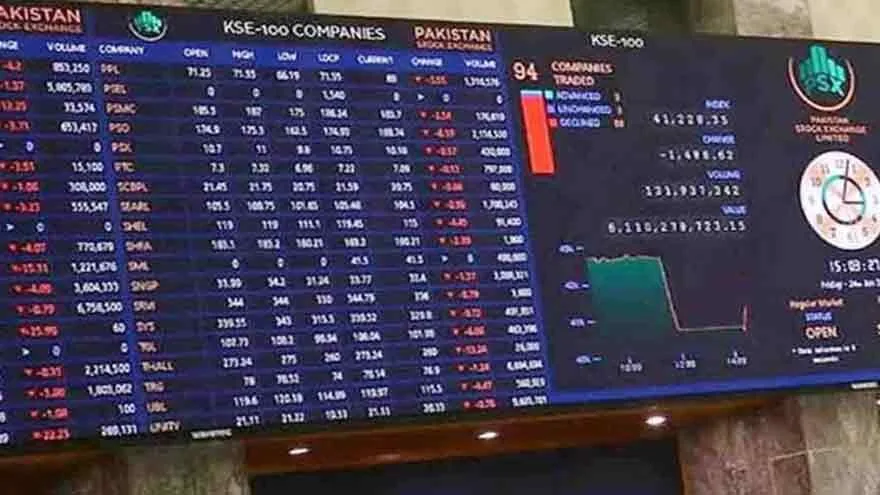
The Pakistan Stock Exchange's benchmark KSE-100 index experienced a significant decline on Thursday, dropping over 3% amid escalating geopolitical tensions and rising oil prices. Investor sentiment weakened as concerns over global developments weighed heavily on the market.
Market Performance and Key Drivers
The KSE-100 opened lower and remained under pressure throughout the trading session, with selling intensifying in the early afternoon. The index reached an intra-day low of 181,961.14 points before a slight recovery in the final hour. It ultimately closed at 182,338.12, down 6,042.26 points or 3.21%.
Analysts linked the market downturn to increased tensions between the US and Iran, which contributed to a rise in global oil prices. This environment has heightened expectations that interest rate cuts may be delayed due to uncertainty. Saad Hanif, Head of Research at Ismail Iqbal Securities, noted that geopolitical developments and oil price trends are influencing market expectations regarding monetary policy.
Corporate Earnings and Market Sentiment
Adding to the negative sentiment were the latest financial results from Fauji Fertilizers Limited, which fell short of market expectations. Sana Tawfik, Head of Research at Arif Habib Limited, pointed out that the disappointing earnings contributed to broad-based selling amid geopolitical concerns.
Topline Securities highlighted that weaker-than-expected gross margins in Fauji Fertilizer Company’s earnings announcement, combined with the absence of anticipated stock splits or bonus issues, triggered panic selling. Investors moved quickly to secure recent gains, intensifying the downward momentum.
Sector Impact and Trading Activity
Major stocks such as Fauji Fertilizers Company (FFC), United Bank Limited (UBL), Engro Corporation (ENGROH), Oil and Gas Development Company (OGDC), and Hub Power Company (HUBC) were the primary contributors to the decline, collectively reducing the index by 3,155 points during the day.
Trading volume on the all-share index decreased to 933.10 million shares from 953.92 million in the previous session, while the total value of shares traded rose to Rs66.41 billion from Rs48.88 billion. K-Electric Ltd led volume with 104.16 million shares, followed by WorldCall Telecom and Bank of Punjab.
Out of 487 companies traded, 83 advanced, 364 declined, and 40 remained unchanged.
Trade Concerns and International Market Overview
Separately, trade organizations have raised concerns about the potential impact of the proposed India–European Union Free Trade Agreement on Pakistan’s textile and hosiery exports. They warn that despite Pakistan's current GSP+ status with the EU, the agreement could place the country at a structural disadvantage.
On the previous day, the PSX closed slightly higher, supported by selective buying in energy, power generation, and banking sectors, despite ongoing volatility.
Globally, Asian markets paused after strong gains, influenced by mixed tech sector earnings and cautious anticipation ahead of Apple's results. Gold and silver prices reached record highs as investors sought physical assets, while oil prices climbed to a four-month peak amid US warnings to Iran.
Monetary Policy and Currency Movements
The US Federal Reserve maintained interest rates as expected, with Chair Jerome Powell citing an improving economic outlook and committee support for a pause. Market expectations for further rate cuts have diminished, with the likelihood of easing by April dropping to 26% and June becoming the more probable timeframe.
In Pakistan, the rupee showed a slight improvement against the US dollar, closing at 279.80 in the inter-bank market, gaining Re0.01.
Related stories
 Stocks
PSX Rebounds as KSE-100 Gains 664 Points: What Lifted the Market?
 Stocks
PSX: KSE-100 Settles at 162,374.88 Points
 Economy
Pakistan Shares Auto Policy 2026–31 Draft With IMF
 Economy
Aurangzeb, Fitch Discuss Pakistan’s Credit Outlook
 Economy
DPM Orders Strict Monitoring of Supply Chains and Prices
 Stocks