ACM Sidhu: Pakistan Emerges as Regional Stabiliser
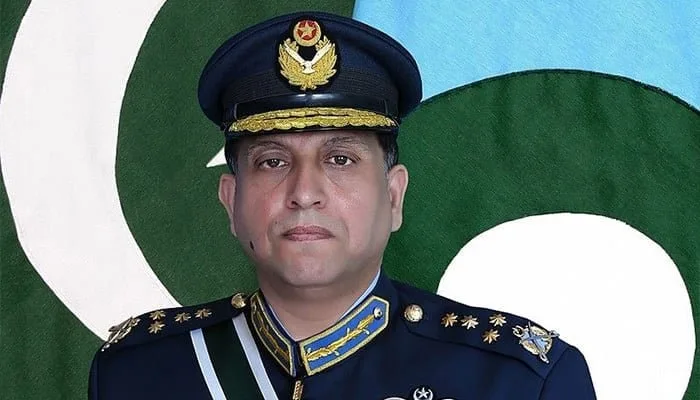
Risalpur, Khyber Pakhtunkhwa – Air Chief Marshal (ACM) Zaheer Ahmed Baber Sidhu, Chief of the Pakistan Air Force (PAF), stated on Tuesday that Pakistan has emerged as a regional stabiliser following the May conflict with India, during his address at the passing out parade at PAF Academy Asghar Khan in Risalpur.
“In the wake of Marka-i-Haq, Pakistan has successfully emerged as a net stabiliser in this part of the world,” ACM Sidhu said, referring to the conflict period from the April 22 Pahalgam attack to the May 10 conclusion of Operation Bunyanum Marsoos.
He emphasised that Pakistan’s strengthened global and regional relations reflect the country’s credible military prowess and effective diplomacy. The air chief noted that Pakistan’s rising global relevance has been a concern for its adversaries, indirectly referencing India, who seek to malign and destabilise Pakistan internationally.
Highlights of the May Conflict
ACM Sidhu credited Pakistan’s success during Marka-i-Haq and Bunyanum Marsoos to a unified national approach, tri-service synergy, and leadership support, stating:
“The people of Pakistan and its armed forces defeated the enemy with far greater numerical might. This resounding success was the outcome of a unified approach by all elements of national power, and above all, Allah’s special blessing.”
He detailed the PAF’s first full-spectrum multi-domain operation, incorporating space, cyber, electronic warfare, long-range vectors, unmanned aerial systems, killer drones, and loitering munitions. Sidhu recalled the downing of multiple Indian jets on May 7, describing it as one of the most intense BVR (beyond-visual-range) aerial battles in modern history, and highlighted Pakistan’s counter-strike during the May 10 missile exchange, neutralising key Indian defence assets and S-400 systems.
Modernisation and Strategic Capabilities
The air chief emphasised that the PAF’s performance was not an isolated event, but the result of years of restructuring, modernisation, and indigenisation. ACM Sidhu highlighted initiatives like the National and Aerospace Science and Technology Park (NASTP), which enabled development of indigenous unmanned systems, EW and space assets, and cyber capabilities as part of Pakistan’s multi-domain operational strategy.
“The smartly executed homeground kill chain, developed in record time, demonstrates the PAF’s ability to adapt and operationalise advanced combat and combat-support technologies.”
Sidhu also mentioned that a range of indigenous projects is still in progress, contributing to the rapid expansion of Pakistan’s strategic and operational capabilities.
Focus on Training and Future Leadership
Addressing the graduating cadets, ACM Sidhu praised their training under a future-focused technological interface that emphasises character, leadership, intellectual development, mental resilience, and physical robustness. He welcomed the presence of Saudi cadets, highlighting it as a symbol of strong bilateral friendship and cooperation between the nations and their armed forces.
“You are entrusted with the noble mission of defending the aerial frontiers of the motherland and carry the hopes of the entire nation on your young shoulders,” Sidhu said.
Conclusion
ACM Sidhu concluded by reiterating Pakistan’s commitment to peace with honour while remaining fully prepared to defend its sovereignty against any challenges. The PAF chief’s address reinforced Pakistan’s regional strategic relevance, modern military capabilities, and focus on preparing the next generation of air force leaders.
Related stories
 Pakistan
Colourful Dancing Fountain Installed at Lahore’s Azadi Square
 Pakistan
CM Maryam Nawaz: Punjab Taking Concrete Steps Against Poverty
 Pakistan
No Room for War in Nuclear Environment: Gen Aamer Raza
 Pakistan
Machine Readable Passports to Be Discontinued Within a Month
 Pakistan
Islamabad’s H-9, G-6 Weekly Bazaars Closed for Fire Safety
 Pakistan