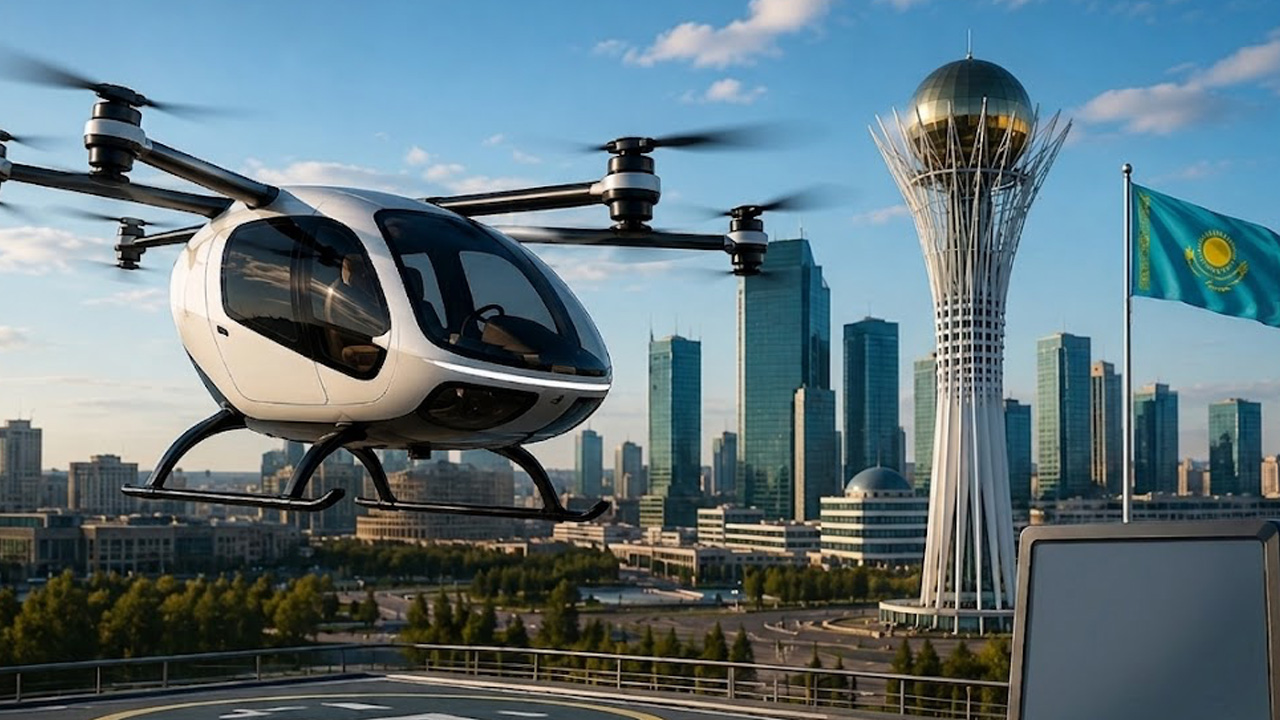
Skyward Bound: Kazakhstan Set to Become First in Central Asia with Air Taxi Service
A Historic Milestone for Central Asian Infrastructure
In a groundbreaking move toward modernizing regional transportation, Kazakhstan is positioning itself as a pioneer in advanced urban air mobility (UAM). The Central Asian nation has initiated test flights and administrative frameworks to launch the region’s very first electric air taxi service. Set against the backdrop of iconic skylines like the Baiterek Tower in Astana and the forward-thinking smart city projects in Alatau, this development marks a historic transition from traditional ground transit to low-altitude aerial mobility.
By embracing Electric Vertical Takeoff and Landing (eVTOL) technology, Kazakhstan is joining an elite group of global frontrunners—including the United Arab Emirates, the United States, and China—that are actively reshaping urban transportation. The initiative introduces quiet, zero-emission passenger aircraft capable of transporting commuters above dense city traffic, symbolizing both technological ambition and a commitment to sustainable development.
The Technology Powering the Future of Flight
The air taxi initiative relies on state-of-the-art eVTOL aircraft designed specifically for short-to-medium urban routes. Equipped with multiple electric rotors, these vehicles offer vertical takeoff capabilities similar to traditional helicopters but operate with significantly reduced noise levels and zero carbon emissions.
Key technical highlights driving the project include:
Speed and Range: The aircraft are built to reach cruising speeds of up to 200 km/h with ranges covering around 200 kilometers on a single charge, ideal for connecting city centers with surrounding suburban and tourist hubs.
Vertiport Infrastructure: Unlike conventional aircraft that require vast runways, air taxis utilize compact “vertiports” equipped with high-speed charging and navigation infrastructure. These hubs can be integrated seamlessly into transport centers, commercial districts, or building rooftops.
Safety & Navigation: Demonstration flights have been conducted under strict aviation guidelines, integrating advanced low-altitude air traffic management systems to coordinate airspace safely.
Economic Impact and Investment Catalysts
Beyond changing how people move, the introduction of air taxis serves as a strategic economic lever for Kazakhstan and the broader region. Emerging low-altitude aviation markets represent a multi-trillion-dollar global sector over the coming decades, and early adoption positions Kazakhstan as the commercial and technological hub of Central Asia.
1. Attracting High-Tech Foreign Direct Investment (FDI)
The venture has drawn significant interest and funding from private international alliances, including partnerships with leading aviation technology developers from China, South Korea, Europe, and the United States. These collaborations bring direct investment into digital infrastructure, airspace management, and local engineering capabilities.
2. Boosting Regional Tourism and Business Efficiency
Inter-city and intra-city travel times between key hubs—such as connecting Alatau and Almaty or accessing remote scenic locations—will be reduced from hours on the road to minutes in the air. Faster transit boosts business productivity and unlocks high-end eco-tourism opportunities across region-wide destinations.
3. Fostering Local Job Creation and Manufacturing Potential
Long-term plans extend beyond operating flight routes. Strategic MoUs and framework agreements envision localized assembly plants, maintenance facilities, and operator training programs. This ecosystem creates specialized jobs for pilots, maintenance engineers, and digital systems technicians.
Overcoming Roadblocks: Regulation and Phased Rollout
While the arrival of air taxis generates immense excitement, launching a commercial fleet requires careful regulatory, operational, and structural preparation. Authorities and private partners, including the Alatau Advanced Air Group (AAAG), are following a structured multi-year roadmap to ensure safety and affordability.
Experimental Legal Regimes: Special legislative frameworks have been established to allow safe testing zones, operational certification, and trial flights.
Infrastructure Expansion: Building a resilient network of vertiports and grid-charging stations remains a top priority prior to full commercial scaling.
Fare Accessibility: Initial operations will focus on commercial premium routes. However, as flight frequencies scale up and fleet sizes grow, long-term targets aim to reduce operational costs to levels comparable with premium ground transportation.
Commercial operations are projected to expand progressively through late 2028 and 2029, setting a clear, sustainable timeline for full integration.
A Bold Vision for Urban Mobility
Kazakhstan’s push into urban air mobility is more than a transport upgrade; it is a declaration of forward-looking ambition. By tackling urban traffic congestion, lowering carbon footprints, and introducing cutting-edge technology, the nation is establishing a new standard for modern cities across Eurasia.


FIA Establishes Special Investigation Unit to Strengthen Cybercrime Detection
The FIA has launched a specialized investigation unit to strengthen cybercrime investigations and enhance digital forensic capabilities. The initiative aims...