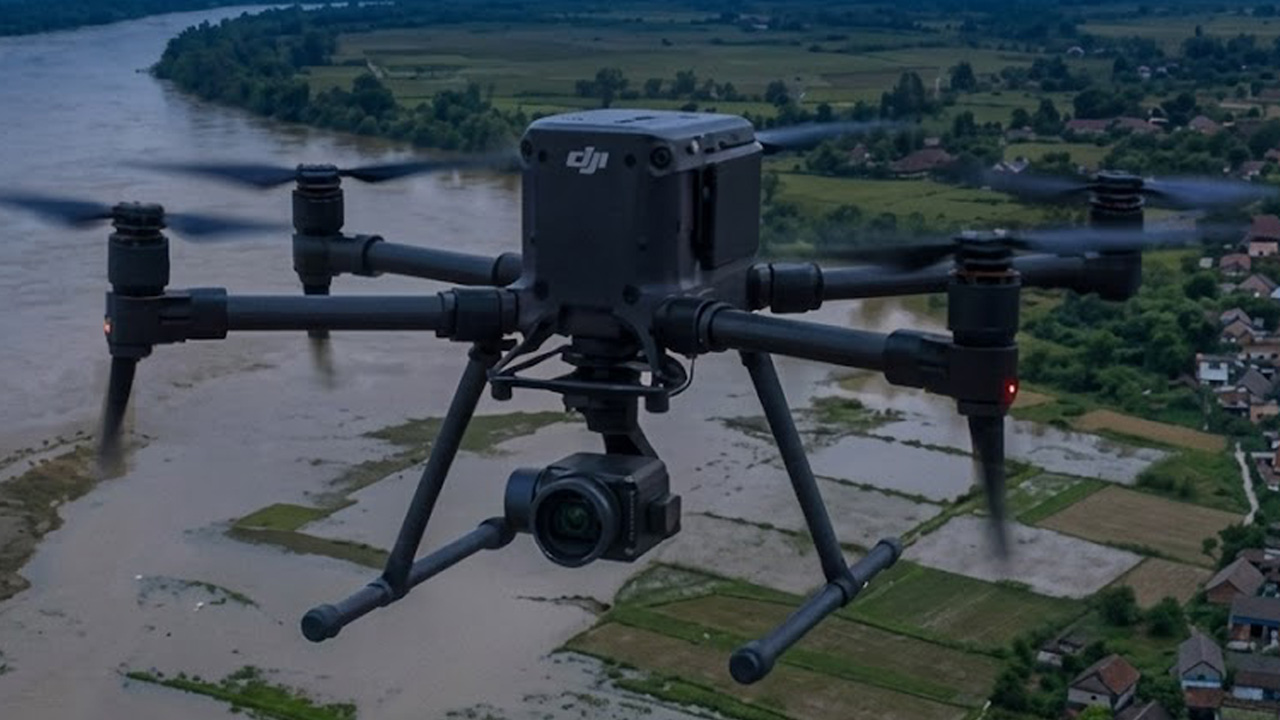
Punjab Launches Drone-Based Flood Monitoring System
In a major leap toward modernizing disaster management and environmental monitoring, the Government of Punjab has officially introduced drone-based surveillance across all major rivers, barrages, and headworks in the province. Initiated under the directives of Chief Minister Maryam Nawaz Sharif, this technological intervention aims to issue early flood warnings, assess real-time water levels, and protect vulnerable communities from incoming flood surges during the monsoon season.
By integrating aerial technology into traditional flood management protocols, Punjab is shifting from reactive disaster response to proactive risk mitigation.
Real-Time Intelligence & Early Warning Capacity
The primary objective of deploying drones is to secure accurate, real-time data from critical water bodies without placing human inspectors at risk. Operated in coordination with the Punjab Safe Cities Authority and local Irrigation Department officials, the drones are equipped with high-resolution visual sensors and thermal capabilities.
Key operational functions include:
Monitoring Water Flow & Surge Levels: Drones continuously capture aerial footage of water discharge at major barrages—such as Head Marala, Trimmu, Rasul, and Balloki—allowing authorities to detect sudden water increases hours before they hit downstream populations.
Riverbank Erosion Assessment: Continuous aerial feeds allow civil engineers to identify structural weaknesses or soil erosion along riverbanks and embankments, facilitating timely repairs.
Identifying Flow Obstructions: Drones map out accumulated debris, silt deposits, or illegal encroachments that restrict natural water flow in rivers, canals, and nullahs, enabling rapid clearance operations.
Widespread Deployment Across Critical Basins
The aerial monitoring fleet has already been deployed across several high-risk hydrological zones throughout the province. Recent surveillance sweeps have covered vital river stretches and structural points, including:
Chenab River: Surveillance at Head Marala in Sialkot, Talibwala Bridge in Sargodha, and Chiniot Bridge to track incoming water volume from upper catchment areas.
Ravi & Sutlej Rivers: Aerial monitoring in Pakpattan, Sheikhupura, and Narowal districts to evaluate overall flood risks and riverbank stability.
Jhelum & Indus Basins: Routine aerial checks at Rasul Barrage in Mandi Bahauddin, Trimmu Barrage in Jhang, and Head Sidhnai in Khanewal.
This real-time aerial data flows directly into provincial and district flood control rooms, enabling seamless inter-agency coordination between the Provincial Disaster Management Authority (PDMA), Rescue 1122, and local district administrations.
Strengthening Public Safety & Crisis Response
Beyond water tracking, drone surveillance serves as a crucial tool for public safety enforcement. Authorities are utilizing the aerial coverage to monitor high-risk, flood-prone zones and enforce strict bans on recreational swimming in dangerous river currents and barrages.
In urban centers and mountain terrains, aerial data helps direct emergency drainage, manage hill torrents in regions like Dera Ghazi Khan and Rajanpur, and monitor landslide hazards in Murree.
“The introduction of drone monitoring allows us to detect approaching flood surges well in advance, strengthening our overall preparedness and protecting lives and infrastructure across Punjab.”
— Chief Minister Maryam Nawaz Sharif
The Broader Impact on Climate Resilience
Pakistan remains among the nations most vulnerable to climate-induced weather extremes, with intense monsoon rains and melting glaciers posing annual threats to agriculture and housing infrastructure. Integrating drone technology into provincial water management offers a scalable, cost-effective framework for climate resilience.
By combining aerial imagery with predictive hydrological modeling, Punjab’s disaster management bodies can issue targeted evacuation advisories, protect standing crops, and minimize economic losses during high-water events.


Pakistan, China Introduce Electric Motorcycle with 200km Range and Swappable Batteries
Central technological and industrial syndicates have officially executed a massive bilateral joint venture, actively partnering with a dominant Eastern green...