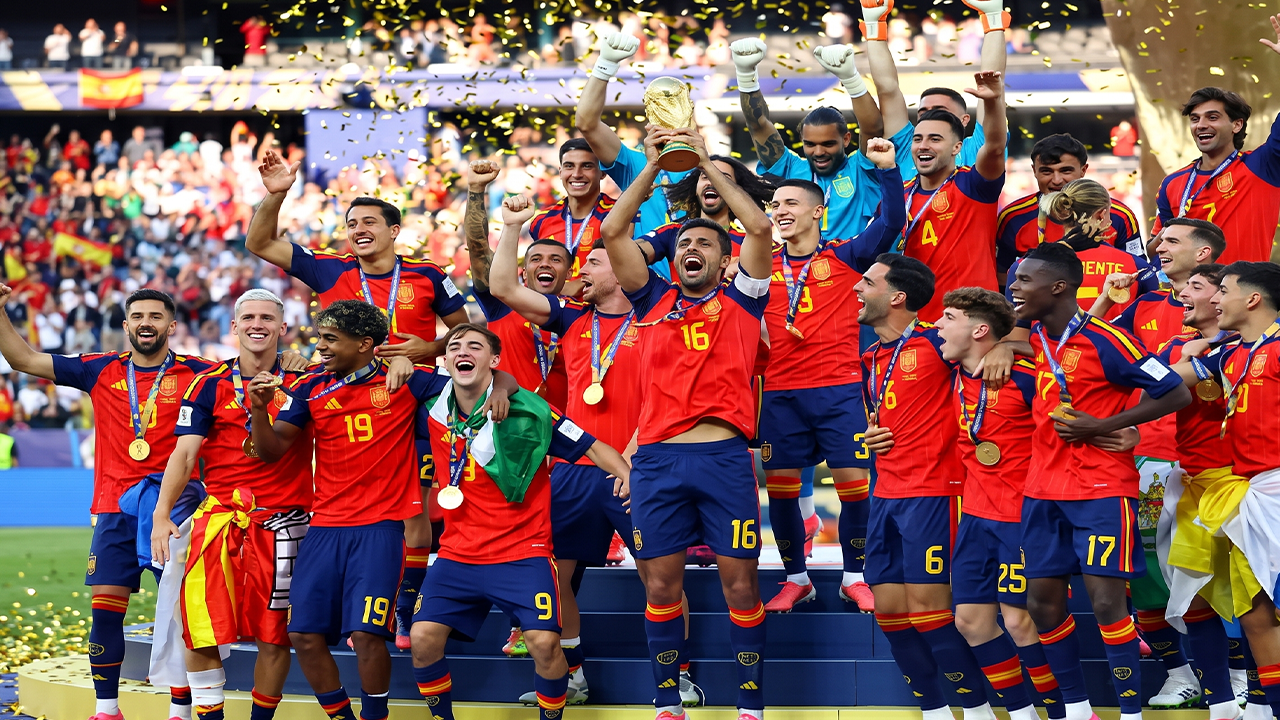
Spain Defeat Argentina to Win FIFA World Cup 2026 as Final Sparks Global Debate Beyond Football
Spain are once again champions of the football world after defeating defending champions Argentina 1–0 in an intense FIFA World Cup 2026 final. The victory secured Spain’s second World Cup title and marked the end of an unforgettable tournament hosted across the United States, Canada, and Mexico. The decisive goal came in extra time from substitute Ferran Torres after a tightly contested match that showcased tactical discipline, defensive organization, and remarkable patience from the Spanish side.
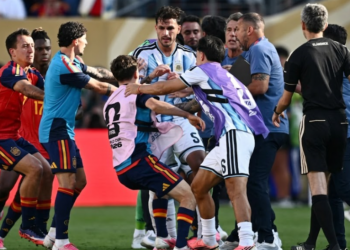
While Spain’s triumph was celebrated by millions of football fans worldwide, the final also became one of the most talked-about sporting events on social media for reasons extending beyond football. Online discussions quickly connected the match with broader political issues, particularly because of Spain’s and Argentina’s governments’ differing positions on international affairs. These conversations spread widely across platforms, although the match itself remained a football contest between two national teams rather than a political event.
A Final Worthy of the World Stage
The 2026 FIFA World Cup final was played before a packed stadium with millions more watching around the globe. Both Spain and Argentina entered the match after impressive campaigns.
Argentina arrived as defending champions hoping to retain the trophy they won in 2022. Led by Lionel Messi, the South American side sought to become the first men’s team in decades to win consecutive World Cups.
Spain, meanwhile, entered the final with an unbeaten run and a squad combining experienced leaders with exciting young talent. Their disciplined passing game, high pressing, and tactical organization made them one of the tournament’s strongest teams.
A Tactical Battle
The final was far from an open, high-scoring encounter. Instead, it became a tactical chess match.
Spain dominated possession for long periods, moved the ball patiently, and consistently searched for spaces in Argentina’s defensive structure. Argentina defended resolutely but struggled to create clear attacking opportunities.
Goalkeepers, defenders, and midfielders all played crucial roles as both teams battled through ninety minutes without a breakthrough.
The tension increased during extra time when fresh legs from Spain’s bench finally changed the game.
Ferran Torres Delivers the Defining Moment
The deadlock was finally broken in the 106th minute.
A well-worked Spanish move created space inside the penalty area before Ferran Torres calmly converted the winning goal, sending Spanish players and supporters into celebration.
It was the most important goal of Torres’ international career and one that immediately entered Spanish football history.
Despite Argentina’s late efforts, Spain defended confidently to secure a famous victory.
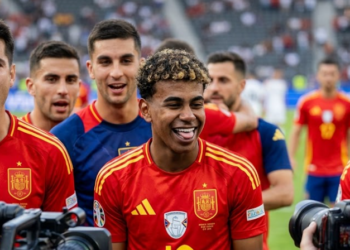
Spain’s New Golden Generation
Spain’s success reflects years of investment in youth development.
Players such as Lamine Yamal, Nico Williams, Pedri, Rodri, and Pau Cubarsí represent a new generation that has already achieved remarkable success at club and international level.
Rather than depending on one superstar, Spain demonstrated the value of teamwork, tactical discipline, and squad depth throughout the tournament.
Head coach Luis de la Fuente deserves significant credit for building a balanced team capable of controlling matches under immense pressure. Spain also extended an impressive unbeaten run under his leadership.
A Difficult Ending for Argentina
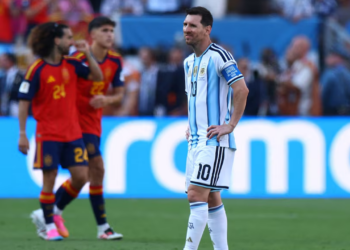
For Argentina, the defeat marked a disappointing conclusion to an otherwise strong campaign.
Lionel Messi, widely regarded as one of football’s greatest players, was emotional after what many believe could be his final World Cup appearance.
Although Argentina fought throughout the tournament, Spain successfully limited their attacking opportunities during the final.
Coach Lionel Scaloni later acknowledged that Spain had been the better side on the day.
Why the Match Dominated Social Media
Within minutes of the final whistle, conversations moved beyond football.
Many users on social media linked Spain’s victory with international politics, pointing to Spain’s government’s support for Palestinian statehood and Argentina’s current government’s close relationship with Israel. Hashtags and political slogans trended alongside football celebrations, illustrating how major sporting events often become part of wider public conversations online.
However, those online reactions reflected public commentary rather than the official purpose of the tournament or the players themselves.
Football Still Came First
Despite the online debate, the lasting story of the final remains Spain’s footballing achievement.
They defeated the reigning world champions through patient possession, disciplined defending, intelligent substitutions, and clinical finishing.
The victory also underlined Spain’s continued influence in world football after years of rebuilding following their previous golden era.
The Impact on World Football
Spain’s World Cup triumph is expected to influence international football for years to come.
Young players around the world will study Spain’s style of play, coaches will analyze their tactical system, and clubs will continue investing in technically gifted midfielders capable of controlling possession.
For FIFA, the expanded 48-team tournament also demonstrated the growing global popularity of football, attracting record audiences and worldwide engagement.
Looking Ahead
Spain now enter a new chapter as world champions, with expectations that this talented generation can compete for more major international trophies.
Argentina, meanwhile, will begin preparing for the future while reflecting on another remarkable era led by Lionel Messi.
Both nations remain among football’s elite, and their meeting in the 2026 World Cup final will be remembered as a contest between two outstanding teams.
Conclusion
Spain’s 1–0 victory over Argentina secured their second FIFA World Cup title and crowned them champions of the first 48-team World Cup. Ferran Torres’ extra-time goal proved decisive, while Spain’s disciplined performance highlighted why they were the tournament’s outstanding side. Although the final also generated widespread political discussion online, the result itself was determined on the pitch, where Spain produced a composed and deserving championship-winning display.