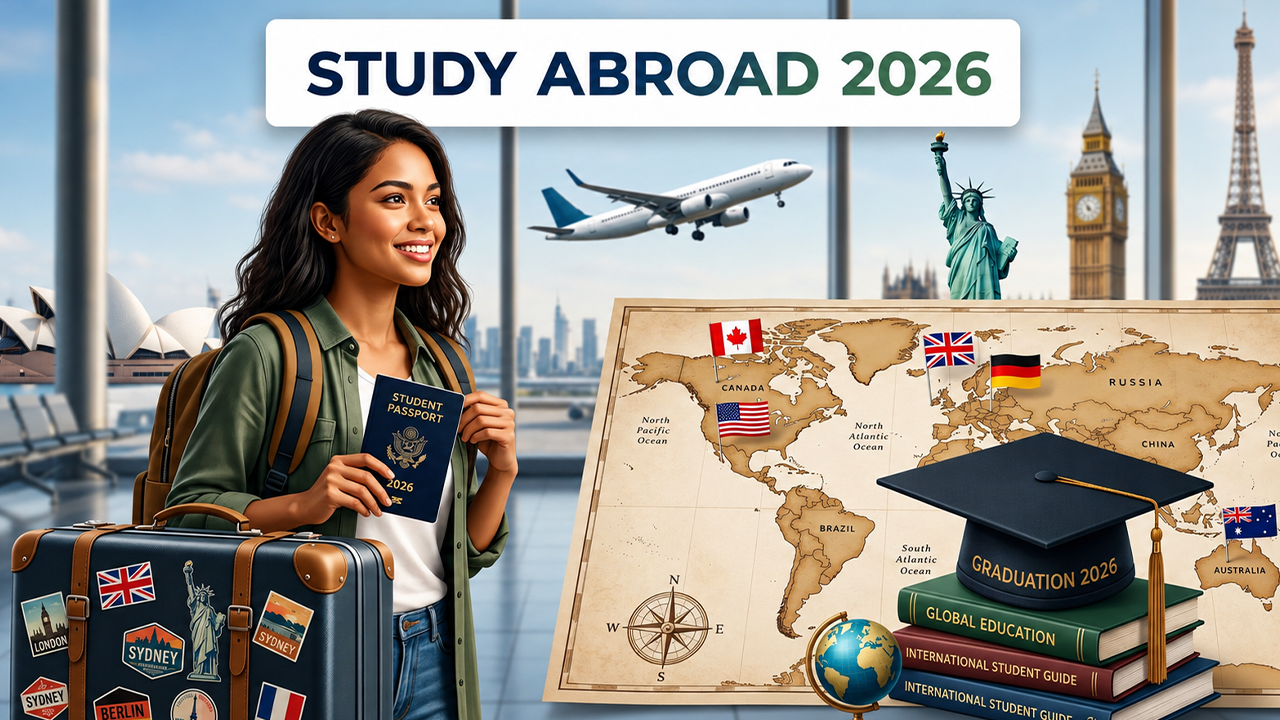
Every year, millions of students dream of studying abroad to receive a world-class education, build international careers, and experience new cultures. Whether your goal is to study in the United States, Canada, the United Kingdom, Australia, Germany, Italy, Ireland, or any other country, the journey begins with proper planning and understanding the admission process.
Studying abroad is no longer just a dream for wealthy families. Today, thousands of students secure scholarships, financial aid, and affordable university options that make international education more accessible than ever. However, many students fail to achieve their goals because they lack accurate information about admissions, visa requirements, scholarships, language tests, and financial planning.
This complete guide explains everything you need to know before applying to study abroad. Whether you’re planning to pursue a bachelor’s, master’s, or PhD degree, this article will help you understand the entire process step by step.
Why Study Abroad?
Studying abroad offers much more than a university degree. It provides international exposure, access to better educational facilities, opportunities to learn from global experts, and the chance to build a career in highly competitive industries.
Students who study overseas often develop stronger communication skills, gain confidence, and build professional networks that benefit them throughout their careers. Many countries also allow international graduates to gain work experience after completing their studies.
Step 1: Choose the Right Country
The first and most important decision is selecting a country that matches your educational goals, budget, and career plans.
Some popular destinations include:
Canada – Affordable education, post-study work opportunities, and pathways to permanent residency.
United Kingdom – Globally recognized universities and shorter master’s programs.
Australia – High-quality education with strong employment opportunities.
Germany – Many public universities offer low or no tuition fees.
United States – Home to some of the world’s top-ranked universities and research institutions.
Ireland – A growing hub for technology, business, and pharmaceutical education.
Before choosing a destination, compare tuition fees, living costs, climate, visa policies, job opportunities, and scholarship availability.
Step 2: Choose the Right University
Do not select a university based only on its popularity.
Research:
University ranking
Course quality
Faculty
Graduate employment rate
Tuition fees
Campus facilities
Student support services
Internship opportunities
Always apply through the university’s official admission process.
Step 3: Meet the Admission Requirements
Every university has its own admission criteria, but most require:
Academic transcripts
Passport
Personal statement
Statement of Purpose (SOP)
Recommendation letters
Updated CV or Resume
English language test results
Application form
Application fee (where applicable)
Some universities may also require interviews or entrance examinations.
Step 4: English Language Tests
If English is not your first language, universities often ask for proof of language proficiency.
Common tests include:
IELTS
TOEFL
PTE Academic
Duolingo English Test (accepted by many institutions)
Different universities require different minimum scores.
Step 5: Scholarships Can Reduce Your Costs
One of the biggest misconceptions is that studying abroad is only for wealthy students.
Thousands of scholarships are available each year, including:
Government scholarships
University scholarships
Merit-based scholarships
Need-based financial aid
Research funding
International student grants
Students with strong academic records usually have better chances of receiving financial assistance.
Step 6: Apply for Your Student Visa
Once accepted by a university, you must apply for a student visa.
Although requirements vary by country, most applications require:
Valid passport
University admission letter
Financial proof
Medical examination (if required)
Police clearance (in some countries)
Visa application form
Passport photographs
Tuition payment evidence (where applicable)
Always check the latest requirements from the official immigration authority of your chosen country.
Step 7: Financial Planning
Before leaving your home country, calculate your expected expenses carefully.
These may include:
Tuition fees
Accommodation
Food
Transportation
Health insurance
Books
Internet
Personal expenses
Proper budgeting reduces financial stress after arrival.
Step 8: Arrange Accommodation
Students generally choose from:
University residences
Private apartments
Shared accommodation
Homestays
Book accommodation early because spaces near universities fill quickly.
Step 9: Prepare Before Departure
Before traveling, ensure you have:
Passport
Student visa
Admission documents
Medical records
Insurance documents
Emergency contacts
Local currency
Copies of important documents
Good preparation makes your arrival much smoother.
Common Mistakes Students Should Avoid
Many applications are delayed or rejected because students:
Apply after deadlines
Submit incomplete documents
Provide incorrect information
Ignore English language requirements
Fail to arrange sufficient finances
Depend on unofficial consultants without verification
Always verify information directly from official university and immigration websites.
Life After Graduation
Many countries now offer post-study work opportunities that allow graduates to gain professional experience.
Students often use this period to:
Build international careers
Gain industry experience
Improve professional skills
Apply for advanced education
Explore long-term career opportunities where permitted under local laws
Understanding the rules of your destination country is essential before making future plans.
Final Thoughts
Studying abroad is one of the biggest decisions a student can make. While the application process may seem complicated, proper planning, accurate information, and timely preparation can significantly improve your chances of success.
Choosing the right country, selecting a suitable university, preparing strong application documents, meeting language requirements, and understanding visa procedures are all important steps toward achieving your educational goals.
With determination, careful research, and a clear plan, studying abroad can open doors to academic excellence, international exposure, and lifelong career opportunities.