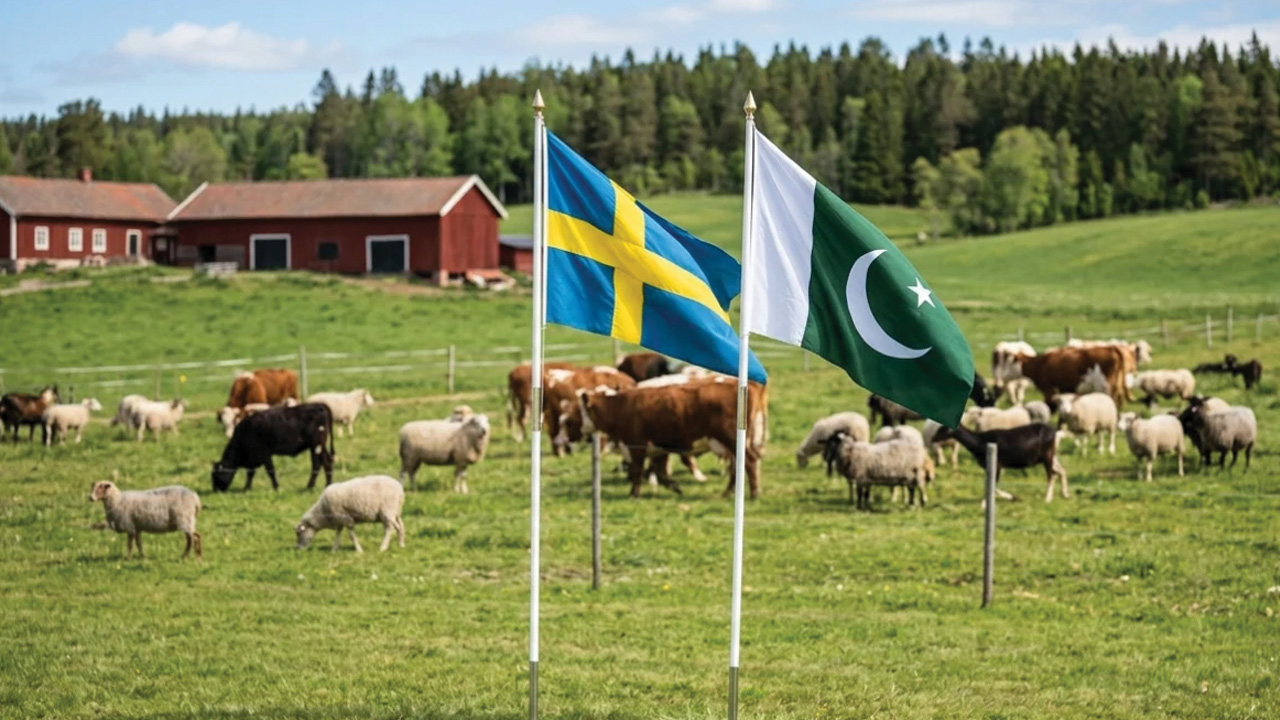
ISLAMABAD: In a major diplomatic development, the Kingdom of Sweden has formally backed Pakistan’s inclusion into the elite global governance framework for healthcare, endorsing the country for membership in the Global Leaders Group on Antimicrobial Resistance (AMR).
The endorsement was formalized during a high-level bilateral meeting between Federal Minister for National Food Security and Research, Rana Tanveer Hussain, and the Ambassador of Sweden to Pakistan, Alexandra Berg von Linde. The meeting marked a significant expansion of bilateral ties, shifting focus toward cutting-edge agrotech innovation, food safety standards, and global health security.
Endorsing Pakistan’s ‘One Health’ Commitment
Ambassador Berg von Linde stated that Sweden’s support recognizes Pakistan’s aggressive domestic efforts to curb the spread of drug-resistant pathogens. Antimicrobial resistance—the evolutionary capability of bacteria, viruses, and fungi to defeat existing medicines—is viewed internationally as one of the greatest silent threats to modern medicine and global food chains.
In response to the Swedish endorsement, Minister Rana Tanveer Hussain confirmed that Pakistan will immediately initiate the formal nomination process to join the Global Leaders Group. He emphasized that the Ministry of National Food Security is currently working in close synchronization with the Ministries of National Health Services and Climate Change to implement a unified, inter-sectoral strategy.
This collaborative framework relies heavily on the One Health approach, an epidemiological model based on the reality that human health, animal wellness, and environmental safety are completely interdependent. Under this mandate, both nations pledged to cooperate on:
Stricter Regulatory Enforcement: Strengthening regional oversight to eliminate the over-the-counter misuse of critical antibiotics in human medicine and industrial livestock farming.
Integrated Surveillance Networks: Building synchronized data-sharing channels to track the mutation and spread of resistant superbugs across borders.
Public Awareness Campaigns: Developing localized community education initiatives to highlight the long-term dangers of antibiotic self-prescription.
Expanding Agrotech, Dairy, and Sustainable Investment
Beyond global health security, the high-level dialogue served as a platform to accelerate practical bilateral partnerships in agricultural modernization. With Sweden actively rolling out its own comprehensive 10-year national AMR strategy, its state institutions are uniquely positioned to transfer valuable technical expertise to Pakistani agricultural networks.
Minister Hussain proposed a structured expansion of joint operations, inviting closer academic and practical engagement between the Pakistan Agricultural Research Council (PARC) and leading Swedish scientific institutions. Key areas targeted for immediate investment and modernization include:
Post-Harvest Supply Chain Infrastructure: Introducing modern Swedish processing and packaging technologies to reduce food losses and increase the value-added potential of local produce.
Dairy and Livestock Upgrades: Partnering with prominent Swedish corporations operating in Pakistan to raise domestic food safety, dairy hygiene, and quality standards to unlock international export competitiveness.
Sustainable Textile Ecosystems: Enhancing resource-efficient, low-chemical manufacturing processes within Pakistan’s textile hubs to align with European environmental mandates.
The meeting concluded with a mutual commitment to sustain active diplomatic dialogue, establish concrete institutional partnerships, and leverage Swedish public health and agricultural innovations to build a more resilient, biosecure future for Pakistan.