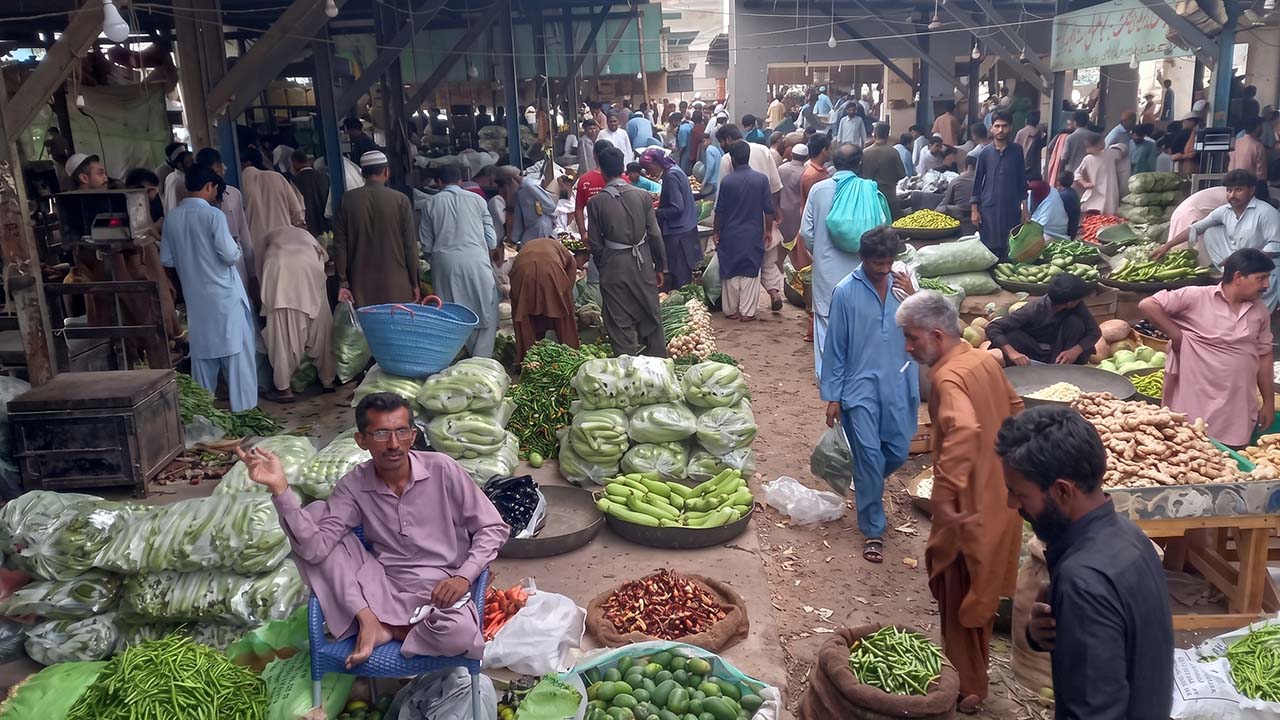
Food security has become one of the most pressing challenges in Pakistan in recent years. Rising inflation, increasing food prices, and economic uncertainty have made it difficult for millions of families to afford nutritious meals. Vegetables, which are an essential part of a healthy diet, have become increasingly expensive, forcing many low-income households to compromise on their nutritional needs. In response to these challenges, the Punjab government has introduced several welfare initiatives aimed at supporting vulnerable communities. One such initiative is the ‘Sanjhi Sabzi’ (Shared Vegetables) Project, which has recently received a significant boost after Punjab Chief Minister Maryam Nawaz Sharif officially endorsed and directed its expansion across the province.
The expansion of the Sanjhi Sabzi project represents more than just another government welfare program. It reflects a broader vision of ensuring food security, strengthening community solidarity, and creating a sustainable support system for underprivileged families. If implemented effectively, the initiative has the potential to improve the quality of life for thousands of households while encouraging a culture of cooperation and shared responsibility among communities.
Understanding the Sanjhi Sabzi Project
The Sanjhi Sabzi project is designed to make fresh vegetables more accessible to low-income families through community-based distribution and support mechanisms. The initiative focuses on providing affordable, and in some cases free, vegetables to people who struggle to purchase nutritious food due to financial constraints.
Unlike traditional relief programs that mainly distribute food packages during emergencies, the Sanjhi Sabzi initiative aims to create a long-term system that promotes regular access to healthy vegetables. The project also encourages local participation, making communities active partners rather than passive beneficiaries.
The concept behind the initiative is simple but impactful: by ensuring that fresh vegetables reach those who need them most, the government hopes to reduce food insecurity while promoting healthier dietary habits.
Chief Minister Maryam Nawaz’s Vision
Chief Minister Maryam Nawaz Sharif’s decision to expand the project highlights the Punjab government’s growing emphasis on social welfare and public well-being. According to the official announcement, the expansion will enable the initiative to reach more districts, urban neighborhoods, and rural communities across Punjab.
The Chief Minister emphasized that access to healthy food should not be considered a privilege but a basic necessity. Her directive reflects the government’s commitment to supporting vulnerable populations facing financial hardship due to inflation and economic pressures.
By expanding the project, the Punjab government aims to ensure that more deserving families can benefit from affordable fresh produce while also strengthening community engagement in addressing social challenges.
Addressing Pakistan’s Food Security Challenges
Food security refers not only to the availability of food but also to people’s ability to access safe, nutritious, and sufficient food at all times. Pakistan has faced increasing food security concerns over the past several years due to rising inflation, climate-related agricultural challenges, supply chain disruptions, and declining purchasing power among lower-income households.
Vegetables are a vital source of vitamins, minerals, fiber, and essential nutrients. However, for many families living below or near the poverty line, purchasing fresh vegetables has become increasingly difficult. As household incomes remain under pressure, many people prioritize basic staples while reducing their consumption of nutritious foods.
The Sanjhi Sabzi project directly addresses this issue by improving access to fresh vegetables, helping vulnerable families maintain healthier diets despite economic difficulties.
Strengthening Community Solidarity
One of the most distinctive features of the Sanjhi Sabzi initiative is its emphasis on community solidarity. Rather than functioning solely as a government aid program, the project promotes the idea of shared responsibility within society.
The concept encourages local communities, volunteers, charitable organizations, and public institutions to work together in supporting vulnerable households. Such collaboration not only improves food distribution but also strengthens trust, compassion, and social cohesion.
Pakistan has a long tradition of charitable giving through Zakat, Sadaqah, and community welfare. The Sanjhi Sabzi initiative builds upon these values by creating an organized framework through which communities can collectively contribute to improving food security.
Benefits for Low-Income Families
The most immediate beneficiaries of the project are low-income households that struggle to meet their daily nutritional needs. Access to fresh vegetables can significantly improve dietary quality, especially for children, pregnant women, and elderly family members who require balanced nutrition.
Reducing food expenses also allows families to allocate their limited income toward other essential needs such as education, healthcare, housing, and utilities. In this way, the project contributes not only to food security but also to overall household financial stability.
Furthermore, consistent access to healthy food can reduce the risk of malnutrition and improve public health outcomes over time.
Opportunities for Farmers
The Sanjhi Sabzi project could also create economic opportunities for local farmers if integrated effectively with Punjab’s agricultural sector.
Many farmers experience financial losses when vegetable production exceeds market demand, resulting in falling prices or unsold produce. Through government procurement mechanisms, surplus vegetables could be purchased directly from farmers at fair prices and distributed through the Sanjhi Sabzi program.
Such an approach would create a win-win situation by supporting agricultural producers while ensuring affordable food reaches vulnerable communities.
Importance in Urban and Rural Areas
Both urban and rural populations stand to benefit from the expansion of the initiative, although their challenges differ.
In urban centers, rising living costs have made fresh vegetables increasingly unaffordable for many working-class families. Daily wage earners, laborers, and low-income employees often face difficult choices between purchasing nutritious food and meeting other household expenses.
In rural areas, poverty, limited transportation, and uneven market access continue to affect food availability despite local agricultural production. Expanding the Sanjhi Sabzi project across both urban and rural communities could help reduce these disparities and improve food accessibility throughout Punjab.
The Need for Transparency
Like any large-scale public welfare initiative, the success of the Sanjhi Sabzi project will depend largely on transparency and efficient implementation.
Clear eligibility criteria should be established to ensure that assistance reaches genuinely deserving families. Modern digital databases, transparent monitoring systems, and independent oversight can reduce the risk of misuse or political favoritism.
Regular evaluations should also be conducted to measure the program’s effectiveness, identify operational challenges, and improve service delivery over time.
Encouraging Women’s Participation
Women can play a vital role in the long-term success of the Sanjhi Sabzi initiative. Encouraging household kitchen gardens, community vegetable cultivation, and women’s participation in local food distribution networks can strengthen both food security and female economic empowerment.
Many women already manage household nutrition and food preparation. By involving them more actively in community agriculture and distribution efforts, the initiative can create additional opportunities for skill development, income generation, and social participation.
Environmental and Sustainability Benefits
The project also presents opportunities to promote environmentally sustainable practices.
Community gardens, urban farming initiatives, and kitchen gardening programs can increase local vegetable production while reducing transportation costs and carbon emissions. Encouraging organic farming methods and efficient water use could further enhance the environmental benefits of the initiative.
Integrating sustainability into the project’s long-term strategy would help ensure that food security improvements remain effective for future generations.
Potential Challenges
While the expansion of the Sanjhi Sabzi project is a positive development, several challenges may affect its long-term success.
Maintaining consistent funding, ensuring efficient supply chains, preventing food wastage, identifying deserving beneficiaries, and coordinating between government departments are all significant administrative tasks. Inflation and fluctuations in agricultural production could also impact the availability and affordability of vegetables.
Addressing these challenges through careful planning, digital monitoring, public-private partnerships, and community involvement will be essential for achieving the project’s objectives.
The Role of Civil Society
Government initiatives become more effective when supported by civil society. Non-governmental organizations, charitable foundations, educational institutions, private businesses, and local volunteers can all contribute to the success of the Sanjhi Sabzi project.
Businesses may support the initiative through corporate social responsibility (CSR) programs, while universities and community organizations can help with awareness campaigns, volunteer services, and local coordination.
Such partnerships can significantly expand the project’s reach while strengthening public trust.
Conclusion
Punjab Chief Minister Maryam Nawaz Sharif’s decision to expand the Sanjhi Sabzi project marks an important step toward addressing food insecurity and promoting community solidarity in the province. At a time when rising inflation continues to challenge household budgets, initiatives that improve access to nutritious food are both timely and necessary.
However, the project’s long-term success will depend not only on government commitment but also on transparent implementation, efficient management, and active participation from local communities. If these elements are successfully combined, the Sanjhi Sabzi initiative could become a sustainable model for social welfare, helping thousands of families access healthy food while fostering cooperation, compassion, and shared responsibility across Punjab.
Ultimately, the expansion of the Sanjhi Sabzi project demonstrates that addressing food insecurity requires more than short-term relief—it demands innovative, community-driven solutions that strengthen both social welfare and human dignity. If executed effectively, this initiative has the potential to become a benchmark for inclusive and sustainable public policy in Pakistan.