President Donald Trump has confirmed that a substantial US naval force is en route to the Middle East as part of ongoing efforts to maintain pressure on Iran amid escalating regional tensions.
US Naval Movement Towards the Gulf
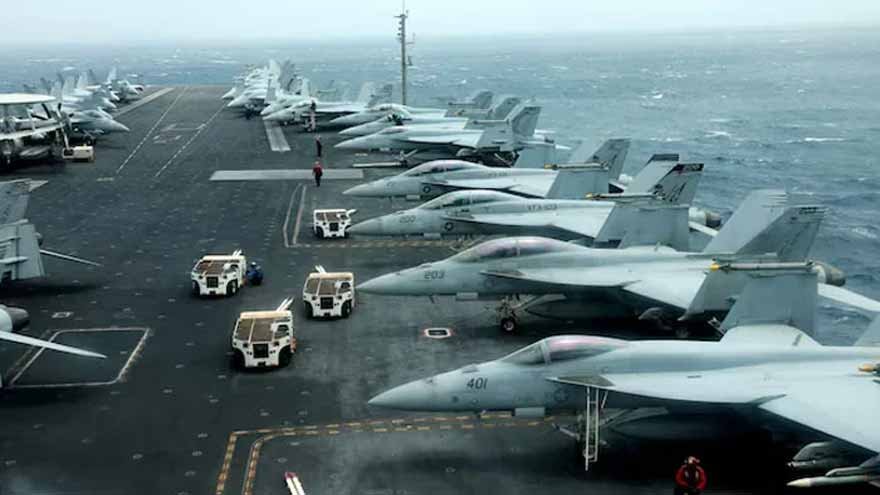
On Thursday, Trump described the deployment as a “massive fleet” or “armada” heading toward Iran, emphasizing that the United States is closely monitoring the situation. Speaking aboard Air Force One after attending the World Economic Forum in Davos, Switzerland, he stated, “We have a lot of ships going that direction, just in case. I’d rather not see anything happen, but we’re watching them very closely.” Despite the military buildup, he expressed hope that the force would not need to be used.
Context of Rising Tensions
The naval deployment follows a period of heightened tensions after Iran’s severe crackdown on anti-government protests, which began in late December. Iranian authorities reported 3,117 deaths related to the protests, though rights groups suggest the actual figure may be higher. Trump has claimed that his threat of force prevented the execution of 837 protesters.
US Military Assets and Preparations
According to US officials, a carrier strike group centered on the USS Abraham Lincoln, accompanied by destroyers and fighter aircraft, is moving from the Asia-Pacific region to the Middle East. Additional air defense systems are also under consideration. Such military buildups are common during periods of increased tension and are often defensive in nature. However, experts recall a similar buildup last summer preceding US strikes on Iran’s nuclear facilities.
Trump’s Position on Military Action and Diplomacy
Although Trump had previously threatened military intervention in response to Iran’s crackdown, his rhetoric has softened recently. He indicated openness to dialogue with Tehran while maintaining a firm stance against Iran’s nuclear ambitions. In an interview, he warned that if Iran resumes its nuclear program, the US would respond decisively, referencing past air strikes on nuclear sites.
International Oversight and Nuclear Concerns
The International Atomic Energy Agency (IAEA) has not verified Iran’s stockpile of highly enriched uranium for at least seven months, despite guidelines recommending monthly inspections. Iran is expected to report on the status of sites targeted by previous US strikes and the nuclear material involved, which includes approximately 440.9 kilograms of uranium enriched up to 60%, nearing weapons-grade levels. This quantity could potentially be used to produce up to ten nuclear weapons if further enriched.
Outlook on Protests and Regional Stability
While protests in Iran have reportedly eased in recent days, it remains uncertain whether they might intensify again. The initial demonstrations began over economic grievances and quickly spread nationwide. The US continues to monitor developments closely as it balances military readiness with diplomatic engagement.