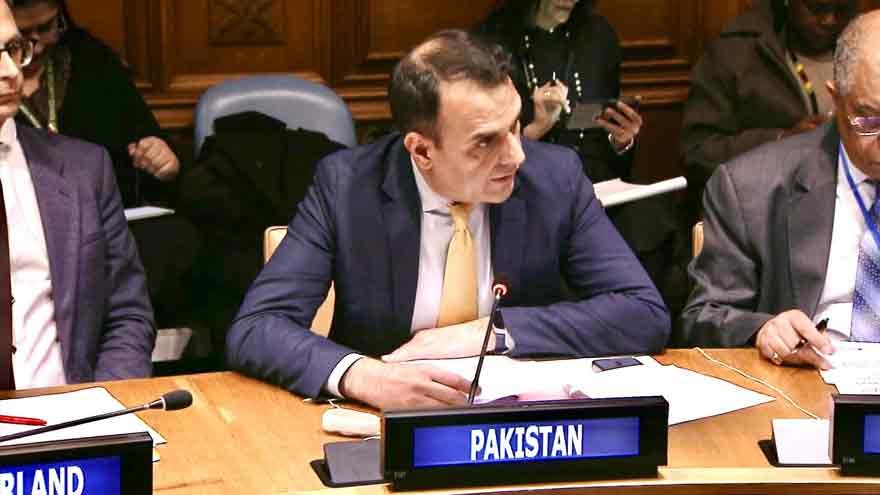
Pakistan has raised alarms at the United Nations regarding India’s unilateral suspension of the Indus Waters Treaty, warning that such actions pose a significant threat to water security and regional stability.
Pakistan Highlights Impact of India’s Actions
During the Global Water Bankruptcy Policy Roundtable, hosted by Canada’s Permanent Mission and the United Nations University, Ambassador Usman Jadoon, Pakistan’s acting Permanent Representative to the UN, criticized India’s decision to hold the treaty in abeyance since April last year. He pointed out material breaches, including unannounced disruptions of water flows downstream and withholding of crucial hydrological data.
Ambassador Jadoon described these moves as a deliberate weaponization of water resources, emphasizing that the treaty remains legally binding and does not allow for unilateral suspension or modification.
Significance of the Indus Waters Treaty
The ambassador underscored that the Indus Waters Treaty, established in 1960, has for over sixty years provided a reliable framework for equitable water management across the Indus River basin. This basin supports one of the world’s largest contiguous irrigation systems, fulfilling more than 80 percent of Pakistan’s agricultural water needs and sustaining the livelihoods of over 240 million people.
Water Insecurity and Regional Challenges
Pakistan faces severe water challenges as a semi-arid, climate-vulnerable, lower-riparian country. It is contending with floods, droughts, accelerated glacier melt, groundwater depletion, and rapid population growth, all of which intensify pressure on its already strained water systems.
Pakistan’s Response Measures
- Integrated water resource planning
- Flood protection initiatives
- Irrigation system rehabilitation
- Groundwater replenishment efforts
- Ecosystem restoration projects such as “Living Indus” and “Recharge Pakistan”
Call for Global Cooperation
Ambassador Jadoon stressed that managing systemic water risks requires international collaboration, especially in shared river basins. He called for enhanced predictability, transparency, and cooperation in transboundary water governance, highlighting that these are critical for the survival of downstream communities.
He urged that water insecurity be recognized as a systemic global risk ahead of the 2026 UN Water Conference, advocating for cooperation and respect for international water laws to protect vulnerable populations.