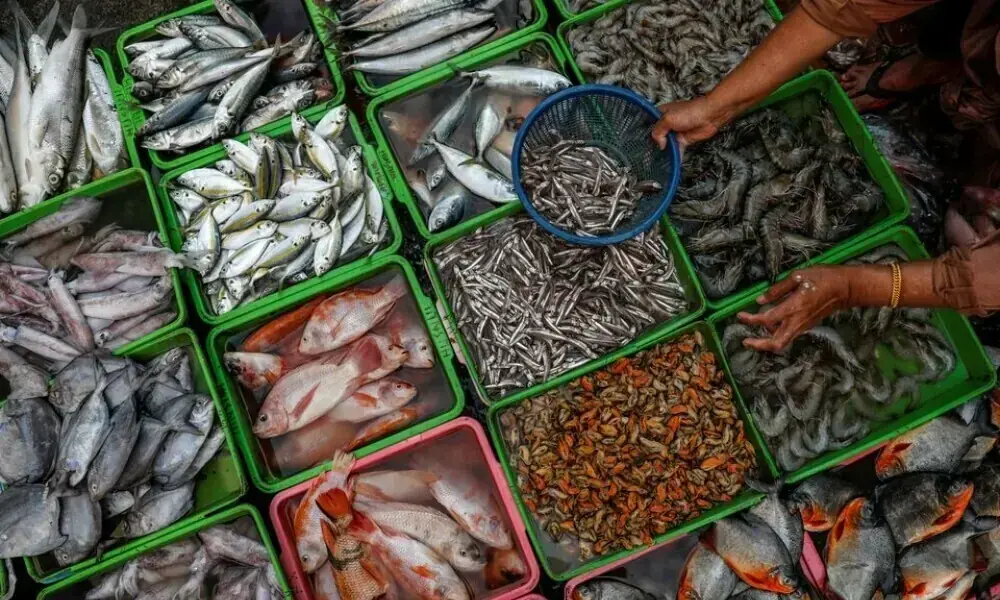
Pakistan’s marine fisheries sector demonstrated strong performance in the first half of fiscal year 2025–26, with seafood exports reaching 122,629 metric tons valued at $253.24 million from July to December 2025.
Export Growth and Economic Impact
Federal Minister for Maritime Affairs Muhammad Junaid Anwar Chaudhry highlighted the data released by the Marine Fisheries Department, emphasizing the sector’s enhanced competitiveness in international markets. Compared to the same period in FY2024–25, exports rose by 19.1% in volume and 21.6% in value, up from 102,942 metric tons worth $208.25 million.
The minister described fisheries as a crucial component of Pakistan’s maritime economy, supporting livelihoods in coastal regions of Sindh and Balochistan. Despite historically contributing about one percent to GDP, the sector has rebounded from pandemic-related setbacks through expanded processing capacity, improved cold-chain logistics, and adherence to international certification standards.
Leading Export Products
- Frozen fish: 26,669 metric tons valued at $53.33 million
- Shrimps and prawns: $40.46 million
- Frozen cuttlefish: $36.13 million
- Other products: shrimp meal, crabs, sardines, mackerel, flatfish, and fish meal contributed to increased export revenues
Key Export Destinations
China remained the largest importer, accounting for nearly 59% of total seafood exports with over 83,602 metric tons valued at $149.2 million. Thailand followed with $31.3 million in imports, primarily shrimps and prawns, supported by Pakistan’s HACCP-certified processing. The UAE, Malaysia, and Japan also showed growth, particularly in cuttlefish and fish meal shipments.
Efforts to diversify markets have expanded exports to the European Union, Saudi Arabia, Vietnam, Kuwait, and the United States.
Monthly Trends and Revenue
Monthly export values showed steady increases, peaking at $56.42 million in November and $55 million in December, driven by seasonal demand and improved logistics. Additionally, non-tax revenue from fisheries rose to Rs127.7 million (approximately $460,000), up from Rs118 million in 2025.
Government Initiatives and Future Outlook
The minister attributed the sector’s progress to government initiatives under the Ministry of Maritime Affairs, including collaboration with the International Maritime Organization on sustainable fishing and investments in port infrastructure at Karachi and Gwadar.
He noted that these developments enhance the fisheries sector’s contribution to foreign exchange earnings and economic stability, while emphasizing the importance of regulatory compliance and sustainable practices to protect marine biodiversity.
Challenges such as climate-related effects on migratory species remain, but emerging technologies like eDNA monitoring and broader blue economy strategies are gaining traction as Pakistan aligns with IMO conventions and strengthens regional cooperation.